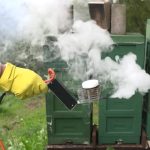
Imagine a chilly autumn morning when you simply don’t want to leave the house until after you’ve had a second cup of coffee. The air is heavy with the scent of woodsmoke, the leaves are just starting to turn, and a row of beehives in the yard’s farthest corner from the house is starting to hum a little more leisurely. In preparation for the impending winter hibernation, the bees themselves are also slowing down. But what’s going on with the bees while the rest of us are pulling out mittens and putting on flannel? Honey blankets are useful in this situation.
Honey beekeeping blankets are considered the workhorses of the beeyard by both experienced beekeepers and inquisitive beginners. These aren’t your grandmother’s doilies or something you’d purchase at a farmer’s market stand. Heck no, these blankets are made specifically for the actual MVPs of pollination: honeybees. They offer them warmth, insulation, and a bit of extra protection that allows colonies to endure awful weather, specifically cold spells of transition.
The Sweet Science of the Buzz
Honeybees as hardy and organized as they are remain a vulnerable little creature when hit with cold snaps. As temperatures start to dip below 50°F (10°C), the bees return to the hive and huddle together to warm up. Center stage remains the queen, warm and cozy, and the worker bees shake their flight muscles to generate warmth. It’s good design, but not optimum. If it’s not insulated, it freezes quickly. Moisture builds up. Food gets frozen. Colonies break down.
You are welcome to enter into the world of the honey blanket. These blankets, often made of moisture-wicking, breathable fabric layered with insulating materials, are designed to fit over or around the hive like a warm hug. And no, we’re not being dramatic. Beekeepers who’ve used honey blankets swear by them—calling them the difference between a thriving hive and a heartbreaker come spring.
Honey blankets provide precise warmth, ideal for heating honey to the desired consistency without overheating.
Not only do they retain heat, but they also regulate condensation. A wet hive is a dead hive. Water runs down and freezes the bees, reducing a plump and healthy colony to a sad statistic. With these blankets, it’s easier to control internal temperature and humidity, giving the bees their best chance at surviving to wildflower time.
Hive Fashion That Actually Works
Come on—beekeeping is already sort of a pretty weird equipment-intensive business. The veil, the suit, the smoker that makes you waving like a wizard over boxes of wood. So adding a “blanket” to the equation might seem like just another gimmick. But observe a winter as your hive is going gangbusters under the cover of a good honey blanket, and you’ll be convinced.
And no, you don’t have to be a DIY mastermind or a fabric connoisseur to employ one. Honey blankets are designed to be easy to use. Lots of them are that straightforward, they just slip right over typical Langstroth hives like a warm hoodie. Others are adjustable straps, air vents, or even moisture-wicking pads on the inside. The best part? Some can be removed in the spring, stretched flat in the shed, and you’re ready to use them again next year.
Honey blankets can be easily fastened with the Velcro strap.
They are also reusable, which makes them a great choice for green beekeeping. With the time, effort, and love that goes into keeping a healthy hive, a honey blanket is a small investment to pay for the potential huge reward.
Why the Blanket Matters More Than You Think
Beekeeping is not honey. It’s taking care of things. Keeping the world of the tiny, buzzing creatures that keeps our worlds turning. Bees pollinate over a third of our food. So when a beekeeper covers their hive in for winter with a honey blanket, it’s not to keep the bees alive—it’s to keep everything those bees touch alive.
And then there is the emotional one. Beekeepers speak of their hives as others who love dogs do about their labs or retrievers. There is a connection, a cadence to visiting the colonies, observing them grow, divide, build, and flourish. To lose a hive to something so avoidable as a cold snap or too much condensation? It hurts. Literally and symbolically.
Beekeepers take great pride in caring for their bees and hives.
And that’s why honey blankets have begun making waves not only with commercial keepers, but with hobbyists and backyard bee enthusiasts as well. They’re an added act of kindness. A commitment to the bees: “You see us through the spring and summer—here is our chance to do the same for you.”
Not Just for the Cold
Although their most glamorous activity is done in winter, honey blankets do find their uses the rest of the year too. In early spring, when the evenings are still chilly but the bees begin to get active, a honey blanket provides transition support. In the more turbulent weather sections of the country—April freak frosts and October surprise hailstorms come readily to mind—a blanket stored away means bed at night.
There are even summer versions, which are adapted to keep the hive safe from blistering heat without cutting back airflow. So while “blanket” will have one thinking about cocoa and fireplaces, the truth is that these machines are chameleon-like enough to maintain year-round hive well-being when properly utilized.
The Takeaway
In its conclusion, beekeeping is a relationship—one between man and bee, nature and nurture. And like any relationship, it endures with a little bit of effort and a dash of convenience. Beekeeping blankets are not as glamorous as the new hive gizmos or all the fuss over the newest in breeding, but they do the job. Peacefully, dependably, and effectively. Not so bad to me.
Honey Blankets are high-quality electric drum heaters designed to keep honey in optimal condition.
They’re a reminder that the little things, like having a warm wrap on a chilly evening, can be all the difference. And if wrapping your bees up in a honey blanket feels like tucking them up like the world’s smallest livestock with bedtime stories and a hot water bottle, well. perhaps that’s not so bad.
Come on, anyway they do produce the honey. At least we should be giving them honey blankets.